
Marine lighting is not simply an equipment purchase. It is an investment in visibility, safety, operational readiness, and the ability of a crew to work effectively in demanding conditions.
Irrespective of a vessel operating in fog, rain, snow, complete darkness, sea spray, or remote waters, the right lighting system can help operators see more clearly, reduce avoidable glare, and perform critical tasks with greater confidence and safety. The wrong solution—a poorly controlled beam, unsuitable color temperature, inadequate output, or improper fixture placement—can limit visibility even when the light appears “bright.”
At PTLX Global, for over 11 years we’ve worked with vessel owners, captains, operators, shipyards, and marine professionals to develop lighting solutions around the application—not simply around a wattage specification. The objective is to put useful light where it is needed while controlling glare, reflection, power consumption, and unnecessary complexity, i.e., mounting and replacements.
Here are five ways a well designed marine LED lighting system can create measurable value.
1. Improved Visibility in Demanding Conditions
Application-Specific Illumination
A marine light fixture should be selected for the job it must perform. Forward visibility, docking, search operations, deck work, aft illumination, and equipment-area lighting can require different beam patterns, mounting positions, intensities, and color temperatures. Learn more about our marine LED searchlights.
Better Contrast and Object Recognition
Effective lighting is about more than raw brightness. A controlled beam can help an operator distinguish vessels, markers, shoreline features, debris, equipment, and working surfaces without overwhelming the scene with unnecessary light.
Lighting Suited to the Environment
Fog, precipitation, snow, haze, and sea spray can scatter light back toward the operator, creating “flash-back.” Careful selection of color temperature, optics, output, and aiming can help limit distracting backscatter and preserve usable contrast.
The result is light that supports the operator’s ability to see instead of competing with it.
2. Reduced Glare and Operator Fatigue
Controlled Beam Placement
Light striking rails, rigging, windows, deck hardware (stainless and aluminum), or the bow can reflect into the wheelhouse and reduce the operator’s ability to see beyond the vessel. Purpose-built optics and thoughtful fixture placement help keep light away from those surfaces.
Appropriate Color Temperature
Many operators prefer warmer forward lighting, often in the 2200K to 2700K range, because it can feel less harsh in darkness and poor weather conditions. Neutral-white lighting in the 4000K to 5000K range may work well for aft areas and certain deck applications. The best choice depends on the vessel, task, conditions, and operator preference. Read our guide to choosing a color temperature for marine lighting.
The Right Amount of Light
More output, without control, is not always better. Excessive intensity can create glare, reduce contrast, and illuminate moisture immediately in front of the vessel. A well-designed system delivers usable illumination at an optimized level, especially during long or demanding conditions.
3. Greater Reliability and Less Operational Disruption
Marine-Ready Construction
Equipment exposed to salt, moisture, vibration, temperature swings, and severe weather must be engineered for the environment. Durable housings, appropriate sealing, corrosion-resistant materials, and sound thermal management help support reliable service.
Long LED Service Life
Compared with legacy lighting technologies, a properly designed LED system can reduce routine bulb or ballast changes and associated maintenance. That is especially valuable when fixtures are installed high on the mast or in other hard-to-reach locations.
Reduced Unplanned Downtime
Lighting failures can interrupt work, delay departure, or limit a vessel’s ability to perform a task safely. Selecting the right equipment and installation approach can reduce avoidable service events.
Reliability creates value not only through maintenance savings, but also by keeping the vessel ready when the lighting is needed most.
4. More Efficient Use of Power and Equipment
High Useful Output per Watt
Modern LED fixtures can deliver substantial illumination while drawing less power than their traditional alternatives. The more meaningful measure, however, is not simply lumens or watts—it is how much useful light reaches the intended area, measured in lux or foot candles.
Optimized Beam Patterns
A fixture that directs light precisely can accomplish more with less wasted output than a higher-powered fixture with poor optical control.
Solutions Tailored to Available Power
Every vessel has practical electrical limits. A well-planned lighting system considers voltage, current draw, switching, wiring, heat, and the other demands placed on the vessel’s electrical system.
Efficient design can reduce unnecessary electrical load while helping operators get more practical performance from every fixture.
5. A Lighting System Built Around the Vessel’s Mission
Flexible System Design
Commercial fishing vessels, workboats, patrol vessels, research vessels, ferries, recreational vessels, and other marine platforms operate differently. Lighting should reflect the vessel’s mission, normal operating conditions, crew preferences, and physical layout.
Mixed-Color-Temperature Options
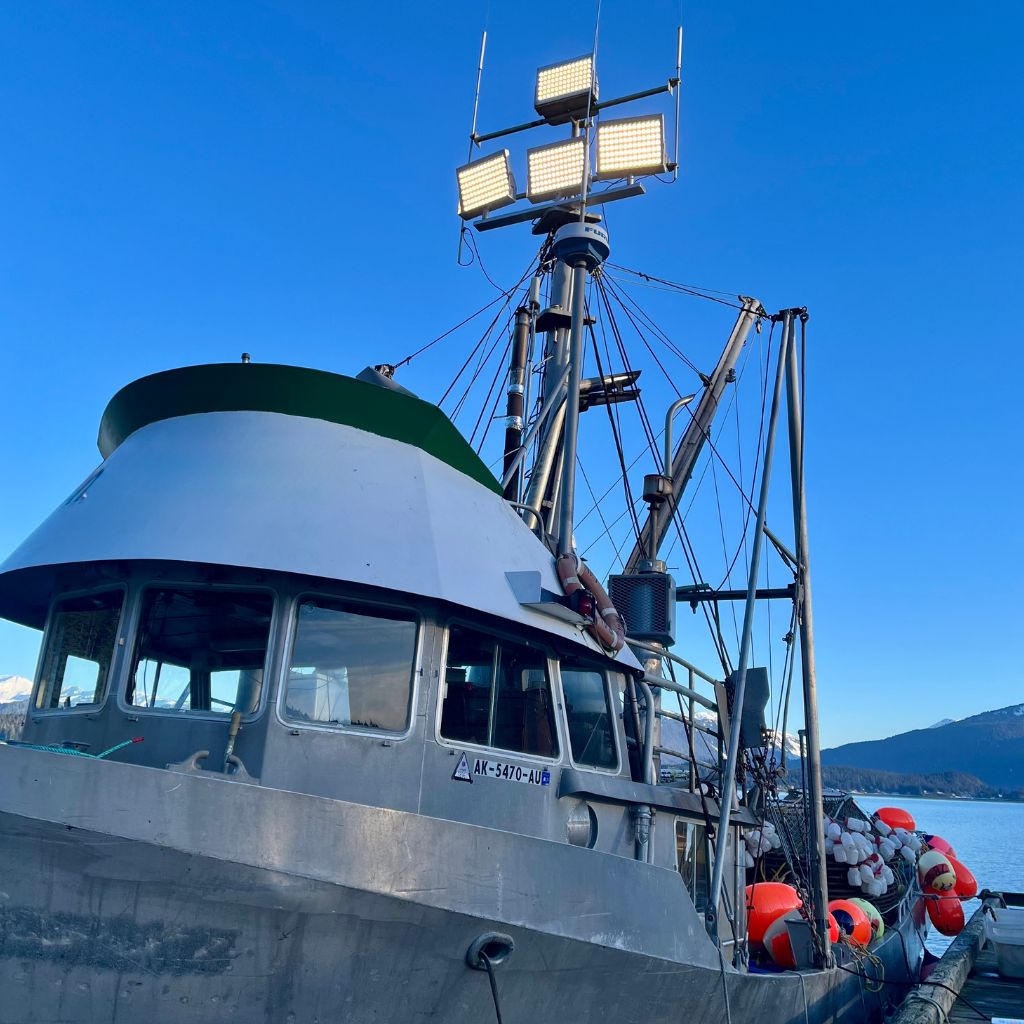
In some applications, combining warm and cool white LEDs can provide added flexibility. For example, we developed a custom 480-LED-watt fixture for a smaller vessel operating in Alaska that combined 2700K and 5000K light wired on separate switches. This gave our customer the option of using the 2700K in really challenging glare conditions, or using it in combination with the 5000K to provide maximum visibility in better conditions.
Scalable Configurations
A successful solution can often be adapted across several fixtures, work areas, or vessels in a fleet. For a lobster vessel in Eastern Canada we provided a five fixture forward-facing setup of 6000W and 480W port and starboard flanking lights. Explore our custom marine lighting solutions.
Instead of forcing the operation to adapt to a standard fixture, a mission-driven approach adapts the lighting system to the operation.
Get More Value From Your Marine Lighting Investment
The true value of a marine lighting system is not captured by wattage, lumen output, or color temperature alone. It is measured by how effectively the system supports the people and vessel operation.
Purpose-built marine lighting can improve usable visibility, reduce distracting glare, lower maintenance demands, use available power more efficiently, and help keep the vessel ready for its mission. Achieving those benefits requires the complete system—fixture, optics, color temperature, output, placement, aiming, controls, and installation—to work together.
At PTLX Global, we bring 11+ years of marine and maritime lighting experience to each application. We listen to the operator, evaluate the environment and feedback, and develop solutions for the way the vessel actually operates.
If you are evaluating a new installation, replacing legacy lighting, or trying to solve a difficult visibility problem, contact us at sales@ptlxglobal.com or 800-397-7859 (please leave a VM if asked—we’ll get back to you right away). We would be glad to discuss your vessel lighting application with our team.